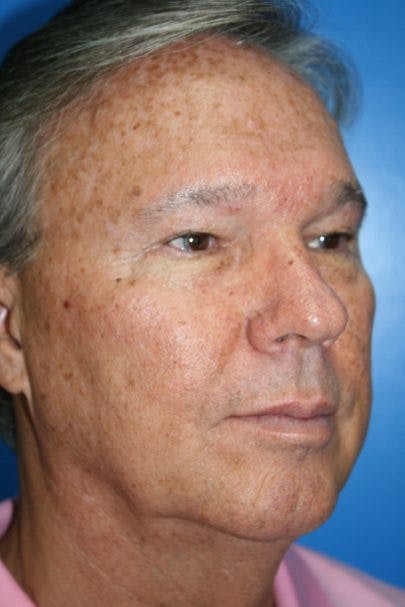
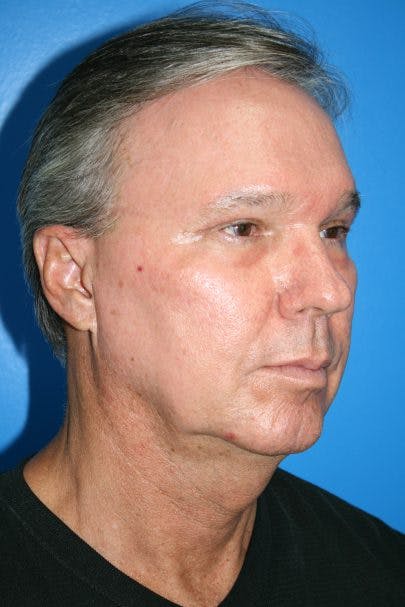
As the skin ages, it begins to lose its elasticity and wrinkles form. Photoaging of the skin produces brown spots and raised lesions called actinic keratosis. Laser skin resurfacing, offered at the Scottsdale, Arizona plastic surgery clinic of Dr. Ronald Caniglia, removes any damaged skin to reveal new, more vibrant and youthful-looking skin underneath. Our skin is mostly comprised of water, which absorbs the laser (light) energy and thus causes vaporization of the skin. Over the next seven to fourteen days, the skin will heal itself to reveal all new skin that is much smoother and more vibrant in color. To learn more about laser skin resurfacing, contact our Scottsdale practice today.
Laser resurfacing can safely be performed on patients of all ages. Individuals with lighter skin are generally considered slightly better candidates; however, that is not to say that darker skinned patients cannot undergo laser resurfacing. If you have any skin conditions such as rosacea, dermatitis, or psoriasis, it is important that you inform the surgeon of this ahead of time. In some cases, a delay in healing can be observed.
It is important to note that there are many different kinds of lasers on the market, including:
CO2 laser : This is a gold standard laser and the most commonly used.
Erbium Yag laser: Shortly after the C02 laser was introduced, this laser hit the market. It is a less intense laser than the C02 laser and provides quicker healing time. However, it is not as effective at smoothing deeper wrinkles.
Fractionated lasers: In the last few years, several fractionated lasers have come on the market, such as Fraxel, Portrait, and Total FX. These typically are C02 lasers but are used on a much lower energy setting. For fine lines and brown spots, these lasers are ideal as they have minimal downtime. If, however, one has wrinkles of any substance, these lasers will fall short of expectations and the results will be inferior to the traditional C02 laser.
Most laser skin resurfacing procedures are performed on an outpatient basis, with a full face procedure taking approximately 45 minutes to complete. Local anesthesia with intravenous sedation (twilight sleep) is recommended when treating the entire face. If only one area is being lasered, local anesthesia alone may be sufficient. The procedure is generally performed as follows:
Patients typically should wait 10 to 14 days before applying makeup after the laser skin resurfacing treatment. For patients undergoing a lighter or less intense laser resurfacing, makeup can usually be applied after five to seven days. The pinkness from the laser resurfacing will ultimately fade, however this may take a few months depending on the patient.
Nevertheless, most patients are able to return to work after 10 to 14 days. Dr. Caniglia prefers that his patients postpone heavy or strenuous exercise and activity for at least two weeks.
Potential risks associated with laser skin resurfacing may include hypopigmentation (lightening of the skin) or hyperpigmentation (darkening of the skin) which are reversible, or scarring, infection, and herpetic breakout. With proper preoperative and postoperative medications and a skilled laser surgeon, like Dr. Caniglia, most of these can be avoided.
Do you want to turn back the hands of time and achieve smooth, clear, youthful-looking facial skin? Laser skin resurfacing is a safe and effective method of rejuvenating your appearance for a bright, vibrant, flawless look. To learn more about laser skin resurfacing, contact our Scottsdale practice today.